

 Homeopathy is a therapeutic system of medicine which is based upon the principle of similars - like cures like – it means that a substance that can cause certain symptoms in a healthy person can cure similar symptoms in an unhealthy person. Homeopathy aims to aid and stimulate the body’s own defense and immune processes. Homeopathic medicines are derived from a variety of plants, animal materials and minerals. These medicines are prescribed to fit each individual’s needs, given in much smaller and less toxic doses than traditional medications, and are used for both prevention and treatment. Established 200 years ago by German physician Samuel Hahneman, and is recognized by the World Health Organization as the second largest therapeutic system in the world.
—————————————————————-
Homeopathy is a system of medicine, which was discovered and developed by a German allopathic physician, Dr. Samuel Hahnemann, between 1792 and 1842.
The then prevalent system of medicine was not at all scientific (in its modern read more [...]
Homeopathy is a therapeutic system of medicine which is based upon the principle of similars - like cures like – it means that a substance that can cause certain symptoms in a healthy person can cure similar symptoms in an unhealthy person. Homeopathy aims to aid and stimulate the body’s own defense and immune processes. Homeopathic medicines are derived from a variety of plants, animal materials and minerals. These medicines are prescribed to fit each individual’s needs, given in much smaller and less toxic doses than traditional medications, and are used for both prevention and treatment. Established 200 years ago by German physician Samuel Hahneman, and is recognized by the World Health Organization as the second largest therapeutic system in the world.
—————————————————————-
Homeopathy is a system of medicine, which was discovered and developed by a German allopathic physician, Dr. Samuel Hahnemann, between 1792 and 1842.
The then prevalent system of medicine was not at all scientific (in its modern read more [...] Homeopathic Awareness
About Homeopathy
Homeopathy is a therapeutic system of medicine which is based upon the principle of similars - like cures like – it means that a substance that can cause certain symptoms in a healthy person can cure similar symptoms in an unhealthy person. Homeopathy aims to aid and stimulate the body’s own defense and immune processes. Homeopathic medicines are derived from a variety of plants, animal materials and minerals. These medicines are prescribed to fit each individual’s needs, given in much smaller and less toxic doses than traditional medications, and are used for both prevention and treatment. Established 200 years ago by German physician Samuel Hahneman, and is recognized by the World Health Organization as the second largest therapeutic system in the world.
—————————————————————-
Homeopathy is a system of medicine, which was discovered and developed by a German allopathic physician, Dr. Samuel Hahnemann, between 1792 and 1842.
The then prevalent system of medicine was not at all scientific (in its modern read more [...] Aim of medicine: An interview with Professor George Vithoulkas
Homeopathy and healthcare: an interview with Professor George Vithoulkas
Abstract
In an age of increasing commercialism and advertisements, we often find saner voices suppressed or go unheard amidst the din and noise of these prevalent views. However alternate views exist like parallel universes, unseen yet strongly influencing us, drawing our heart and mind towards a deeper hidden reality. Homeopathy is one such world-view that looks at man from a different and holistic viewpoint than merely as a bundle of chemicals or a mechanical machine. As cracks begin to appear in our healthcare delivery system and promises of ultimate therapy through allopathy, more and more attention is turning towards alternate approaches of which homeopathy is among the most well-recognised and trusted method of treatment. The following interview gives us a brief but incisive overview of this alternate field of medicine that continues to help and heal many despite the strictures passed upon it by the proponents of mainstream medicine.
Introduction
The rapid development of medicine in the 20th century, due to the large-scale implementation of breakthroughs in chemistry, biology and applied technologies read more [...]
Observing the patient after prescribing the homeopathic Remedy – Hussain Kaisrani
 After prescribing the remedy, the physician shall very carefully observe his patient in every respect;
his general condition,
aggravations and amelioration of symptoms,
any change in the symptoms or in the patient himself, etc.
The Observations
After giving the medicine to the patient if the physician's observation is a prolonged aggravation and final decline of the patient, the case is incurable.
The Second observation is, the long aggravation, but final and slow improvement. It is a hopeful case with prolonged repetition of the same remedy at longer intervals. For many years you may go along with prolonged aggravations followed by amelioration untill an outward manifestation appears whereby the patient will attain final recovery.
The Third observation after administering the remedy is, quick aggravation, short and strong with rapid improvement of the patient. Whenever you find an aggravation comes quickly, is short, and has been more or less vigorous, then you will find improvement of the patient will be long, the structural changes many appear in the surface organ, and with the passage of time the surface organs regain their natural structure after they read more [...]
After prescribing the remedy, the physician shall very carefully observe his patient in every respect;
his general condition,
aggravations and amelioration of symptoms,
any change in the symptoms or in the patient himself, etc.
The Observations
After giving the medicine to the patient if the physician's observation is a prolonged aggravation and final decline of the patient, the case is incurable.
The Second observation is, the long aggravation, but final and slow improvement. It is a hopeful case with prolonged repetition of the same remedy at longer intervals. For many years you may go along with prolonged aggravations followed by amelioration untill an outward manifestation appears whereby the patient will attain final recovery.
The Third observation after administering the remedy is, quick aggravation, short and strong with rapid improvement of the patient. Whenever you find an aggravation comes quickly, is short, and has been more or less vigorous, then you will find improvement of the patient will be long, the structural changes many appear in the surface organ, and with the passage of time the surface organs regain their natural structure after they read more [...] The Future of Homeopathy – A Perspective View
 There is an overall impression that homeopathy is used today by millions of people and practiced by hundreds of thousands of practitioners all over the world … which is true! Whether the practitioners are capable of using this new force in medicine in an appropriate way is a totally different story. The homeopathic field of medicine is so open to all kind of interventions, distortions and bad practice that its original form is almost totally masked or lost and its effectiveness reduced to a mere 10% of its capabilities. This minimal 10% derives mainly from a small group of practitioners that have followed the original teachings of S. Hahnemann and the right lines of applications. The effect of those practitioners in their private practice is near 70-80% of success. These practitioners were recognised as classical homeopaths, but soon a lot of intruders attached to their name this qualification in order to confuse the public and get a portion of the clientele.
Though Homeopathy’s overall effectiveness is low due to its bad application by most of its practitioners, in the minds of the people it has been established as a form of medicine that is better and more effective than conventional read more [...]
There is an overall impression that homeopathy is used today by millions of people and practiced by hundreds of thousands of practitioners all over the world … which is true! Whether the practitioners are capable of using this new force in medicine in an appropriate way is a totally different story. The homeopathic field of medicine is so open to all kind of interventions, distortions and bad practice that its original form is almost totally masked or lost and its effectiveness reduced to a mere 10% of its capabilities. This minimal 10% derives mainly from a small group of practitioners that have followed the original teachings of S. Hahnemann and the right lines of applications. The effect of those practitioners in their private practice is near 70-80% of success. These practitioners were recognised as classical homeopaths, but soon a lot of intruders attached to their name this qualification in order to confuse the public and get a portion of the clientele.
Though Homeopathy’s overall effectiveness is low due to its bad application by most of its practitioners, in the minds of the people it has been established as a form of medicine that is better and more effective than conventional read more [...] KEYNOTES derived from Homeopathic Material Medica VIVA George Vithoulkas – Hussain Kaisrani HOMEOPATHIC Consultancy Lahore
ACONITUM NAPELLUS (Acon.)
All ailments acute or chronic are attended by fear of impending death and the feeling that death is imminent or near. Ailments that arise from fright that threatened the life of the person.
FEAR OF IMPENDING DEATH
MENTAL
AILMENTS FROM FRIGHT.
FEARS: DEATH (during labor, pregnancy, menses, heart symptoms), predicts the time of death, presentiment of death. OPEN SPACES, NARROW PLACES, TUNNELS, EARTHQUAKE, CROWD, AIRPLANE, heart disease, darkness.
PANIC STATES accompanied by: palpitations, red face, one sided numbness, faintness, restlessness, perspiration, trembling, vertigo, dyspnoea, fear of death.
Calm between panic states.
PHYSICAL
Acute symptoms arise from EXPOSURE TO DRY COLD AIR or WIND (cough, eye inflammation, coryza, prosopalgia). From becoming cold during perspiration.
During fever the skin is dry and hot, there is intense nervous restlessness and tossing about, chills, with intense thirst for cold water, one cheeck is red and hot and the other pale and cold.
Face bloated and red. read more [...]
SOME REMARKS ON ARNICA, CACTUS AND GELSEMIUM – Talks on Classical Homeopathy Part 3 – Discussion with Geroge Vithoulkas
SOME REMARKS ON HOMEOPATHIC ARNICA, CACTUS AND GELSEMIUM
George: Do you remember from the conference last year where the man was describing that he had an accident and took Ara. It was interesting. He said that it affected him very much. After two days he started to have a severe, constricted pain in the chest. Arn. did not work any more and he took some Chinese acupuncture which caused improvement. What was the remedy which he should have taken? First he took Arn. because he had bruises and the pain went away. But then this constriction developed which was very severe and he had to take painkillers. Arn. is not indicated anymore, of course, but Cact. will act like magic.
Al has shown me a very interesting description of what is going on in a Gels. case. There was internal tremblings and pleural symptoms. The trembling was "up and down and around".
Responses : Gels. is not listed under "internal trembling" in the repertory.
George : Yes, it is interesting.
When I described Gels. I told you about how he would be before going to court There would be internal trembling and loose bowel movements. Didn't I have that that impression for you ?
Responses : Yes.
George read more [...]
Homeopathic Remedy Hepar sulphur (hep.) ہیپر سلفر – The Essence of Materia Medica by George Vithoulkas
To summaries Hepar sulph. in two words, one could say; OVERSENSITIVE and ABUSIVE. Hepar patients appear as if their nerves are on edge, as if the nerve endings are raw and exposed. IN this state, they feel as if they are going to break apart, that they cannot take the slightest pressure – whether physical or psychological. Then they become angry, nasty, vicious, and abusive of other people.
In the first stage of pathology in Hepar, there is a general weakness and sensitivity. They may become irritable over small things, but this is still controllable situation.
Next, there is a nervous excitement. Everything is done in a hurry. He speaks fast, eats fast, drinks fast, etc. The nervous system becomes would up into a super-excited state. This state of hastiness is most comparable to Sulphuric acid in its intensity. As the nervous system pathology becomes more extreme, the oversensitiveness becomes most evident. At first, this is manifest in the typical Hepar sensitivity to cold. Hepar is aggravated by dry cold air, especially by dry cold winds. Humid, cold weather, which bothers most people, is not so severe for Hepar patients.
A memorable peculiarity of Hepar is its sensitivity read more [...]
Autumn season homeopathic rubrics, symptoms by dr devendra pal singh
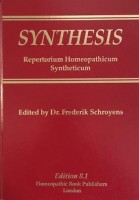 Hello everyone its been since I have posted any article now. My self dr devendra pal singh
Autumn season rubrics
Autumn season is from august to October
Today we will discuss autumn season rubrics and see their efficacy in daily practice. Taking season as a rubric will increased our range to explore the vitality, 1st of all many physician asked me why to consider season as a rubrics my answer is if its of no use then why it is given in repertory and materia medica and certain people tend to get sick in a particular season so its related to their diatheses which indirectly by default relates it to the constitution of the patient. And also taking season as rubric means we have a symptom which is partly general and partly particular of mental of pathological.
We all know and read about autumnal dysentery of the colchicum. Now this symptom is very popular amongst homoeopaths and students. But there are other symptoms also. We should consider them also. If you believe in colchicum’s autumnal dysentery then you should also believe in this article I am stating now.
BOERICKE REPERTORY
ABDOMEN - Diarrhoea, enteritis - aggravation - In autumn: (5) chin. Colch. Merc. nux-m. verat.
ABDOMEN read more [...]
Hello everyone its been since I have posted any article now. My self dr devendra pal singh
Autumn season rubrics
Autumn season is from august to October
Today we will discuss autumn season rubrics and see their efficacy in daily practice. Taking season as a rubric will increased our range to explore the vitality, 1st of all many physician asked me why to consider season as a rubrics my answer is if its of no use then why it is given in repertory and materia medica and certain people tend to get sick in a particular season so its related to their diatheses which indirectly by default relates it to the constitution of the patient. And also taking season as rubric means we have a symptom which is partly general and partly particular of mental of pathological.
We all know and read about autumnal dysentery of the colchicum. Now this symptom is very popular amongst homoeopaths and students. But there are other symptoms also. We should consider them also. If you believe in colchicum’s autumnal dysentery then you should also believe in this article I am stating now.
BOERICKE REPERTORY
ABDOMEN - Diarrhoea, enteritis - aggravation - In autumn: (5) chin. Colch. Merc. nux-m. verat.
ABDOMEN read more [...] ہومیوپیتھک تشخیص اور ایلوپیتھک تشخیص: ڈاکٹر بنارس خان اعوان
 تشخیص یعنی بیماری کا پتا چلانا بالعموم ایلوپیتھک پس منظر میں بولا جاتا ہے جب کہ ہومیوپیتھی میں اس کا مطلب مختلف ہے۔
ایلوپیتھی میں تشخیص کا مطلب اس وائرس، بکٹیریا یا مائکروب وغیرہ کا کُھرا ڈھونڈنا ہوتا ہے جو (ان کے خیال میں) بیماری کا اصل سبب ہوتا ہے۔
اگر سراغ مل جائے تو اس کا توڑ کرنے والی انٹی بائیوٹک، انٹی وائرل یا انٹی الرجک دوا تجویز کی جاتی ہے۔ اس مقصد کے لیے مختلف لیب ٹیسٹس، ایکس رے، سی ٹی سکین اور بے شمار دیگر ٹیسٹ اسی سلسلے کی کڑی ہیں۔ اور اگر سراغ نہ ملے تو بیماری پر لاعلاج (یا پھر الرجی) کا لیبل لگا کر فائل بند کر دی جاتی ہے۔
ان ٹیسٹ کے حق میں بہت کچھ کہا اور لکھا جاتا ہے اور یقیناً ان کی افادیت سے کسی کو انکار نہیں، ہومیوپیتھی کو بھی نہیں۔
طبِ ایلوپیتھی read more [...]
تشخیص یعنی بیماری کا پتا چلانا بالعموم ایلوپیتھک پس منظر میں بولا جاتا ہے جب کہ ہومیوپیتھی میں اس کا مطلب مختلف ہے۔
ایلوپیتھی میں تشخیص کا مطلب اس وائرس، بکٹیریا یا مائکروب وغیرہ کا کُھرا ڈھونڈنا ہوتا ہے جو (ان کے خیال میں) بیماری کا اصل سبب ہوتا ہے۔
اگر سراغ مل جائے تو اس کا توڑ کرنے والی انٹی بائیوٹک، انٹی وائرل یا انٹی الرجک دوا تجویز کی جاتی ہے۔ اس مقصد کے لیے مختلف لیب ٹیسٹس، ایکس رے، سی ٹی سکین اور بے شمار دیگر ٹیسٹ اسی سلسلے کی کڑی ہیں۔ اور اگر سراغ نہ ملے تو بیماری پر لاعلاج (یا پھر الرجی) کا لیبل لگا کر فائل بند کر دی جاتی ہے۔
ان ٹیسٹ کے حق میں بہت کچھ کہا اور لکھا جاتا ہے اور یقیناً ان کی افادیت سے کسی کو انکار نہیں، ہومیوپیتھی کو بھی نہیں۔
طبِ ایلوپیتھی read more [...] TUBERCULINUM – An important Nosode – Bhuvaneswari Jayashankar
.... ANOTHER IMPORTANT NOSODE...... TUBERCULINUM... Source
Human or animal tuberculous tissue rendered sterile.
Personality profile
Some homeopaths treat Tuberculinum simply as a nosode, to be given when there is a family history of tuberculosis. The mentals of Tuberculinum constitute a personality profile as distinct and specific as any other type, but unfortunately it is poorly understood by the majority of homeopaths, and this is one reason the remedy is used more as a nosode than as a constitutional remedy.
The remedy is made from tuberculous lymph nodes, and as usual there is some correspondence between the origin of the remedy and the characteristics of the patient who needs it, including their personality. The image of the consumptive writer racing against time to complete his work of intellectual romanticism, living off bread, wine and tobacco, poignantly embodies the spirit of Tuberculinum. Tuberculinum individuals have a kind of hunger to experience a great many things in a short period, as if time were really running out for them. They cannot bear a steady routine, unless it is packed with excitement. More than any other type they are subject to that awful feeling read more [...]
 Hussain Kaisrani, The chief consultant and director at Homeopathic Consultancy, Lahore is highly educated, writer and a blogger