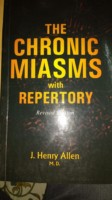
(Derived from Rajan Sankaran, System of Homeopathy & An Insight into Plants vol I) One of the most contentious of our theories, one of the most difficult concepts for practitioners to put into practice. Many homoeopaths abandon the idea of miasms as not being useful to them, or being too hard to use in practice. This also means that in order to try and understand it, the theory has been altered since Hahnemann’s day. There are now several models of Miasm. Hahnemann said that attending to the Miasm was of utmost importance in curing Chronic disease. However due to the confusion over how to classify remedies, how to determine the miasm, it was not adopted by all homoeopaths. It is often one of the most difficult concepts to teach to students. I have probably found it to be the single most challenging aspect of training – and have tried many different ways to teach it. Some did not work, and some did. In fact I would say that lecturing actually helped me to come to a better understanding of it. Faced with the questions, lack of comprehension, and sometimes frank disbelief of aspiring homoeopaths, it forced me to look at how I applied miasmatic theory in clinic. We read more […]
Best Homeopathic Medicines for Panic Attacks

What are Panic Attacks? Panic attacks are severe episodes of sudden anxiety, apprehension or fear. They occur without any real or apparent danger and mostly bring on some form of physical reaction such as dizziness, heart palpitations, dyspnea, nausea and faintness. Panic attacks can be truly frightening and leave the person shaken and deeply upset. Once the mind goes into panic mode, the person losses control over his reactions. Certain situations such as a trauma, past experience or phobia can act as triggers. Advantage of Homeopathic Treatment Homeopathy is a proven alternative treatment option for anxiety related disorders such as panic attacks. Natural and safe, Homeopathic medicines are deep acting and have no side effects on the body. Unlike the conventional mode of medicine, Homeopathic medicines do not supress the disease and its symptoms. In fact, they attack the disorder at the root and set off the body’s own restorative processes, making it strong enough to completely eradicate the disease. Supressing the disease process makes it stubborn. Homeopathic medicines are a natural, healing alternative. More importantly, they are not habit-forming in nature and can be taken read more […]
Homeopathic Rubrics of spring season from all the major repertories – Dr Devendra Pal Singh
I have collected rubrics of spring season from all the major repertories. And I wish you all study them deeply. So that when patient comes to you in this season with complaint of dysentery so you better be prepared that you have to consider kali. bi. Now we all are familiar with spring coryza of allium.cepa, and autmnal dysentery of colchicum. we must think why season used as a symptom by our stalwarts, !!!!Because in both clinical and drug proving they found affinity of certain drugs towards particular seasons with associated complaint. For eg vertigo in spring season apis is only medicine. In this season you will have complaints of both acute and chronic like vertigo, asthma, cough, skin eruptions, coryza, dysentery, fever, toothache, facial neuralgia, diarrhea, hoarseness of voice, weakness, stomach ulcers, rheumatism and many more. I give a case example, a chronic patient of asthma ive tried everything but failed ars, nat.s, tub, sambucus but last year he presented with dysentery in spring season and what happened was after kali.bi dysentery was gone and also the asthma. Some times acute phase demands the medicine of inner vitality which will lead to cure. Some read more […]
The Essence of Materia Medica: George Vithoulkas
Aethusa cynapium (aeth.) The chronic type Individuals who feel apart. Strong emotions but do not express them easily. Moved to tears but do not actually cry – emotions felt inside (Unlike Ignatia – moved to tears but constricted at throat so doesn’t cry). Own emotional world – very intense. Live happily by themselves, but also enjoy company. Talk to themselves. Sleep Intensity comes out in sleep – sleepwalks. Deep sleep on either left or right side. Salivate during sleep. “FEAR of closing eyes lest should never wake”. – Kent. Agg. darkness – do not like darkness – fear will not wake up again. Feel as if suffocating from darkness – have to open window (Lachesis, Grindelia). Cannot control the breathing – have to get up, (Ignatia – fear will never sleep again). Fear of not waking up after an operation. Extra notes Crazy for animals, cats and dogs etc – look after them with unnatural passion. Talk to animals when don’t talk to people. Great irritability. P.M. T. – tremendous build up, headache, feel rotten two days before and days 1 and 2, then relax and libido increases immediately after menses. – Fear of losing a loved one is unbearable. Sudden redness read more […]
Rheumatic Fever
A systemic, febrile disease that is inflammatory & non-suppurative in nature & variable in severity, duration & sequelae. It is acute febrile illness following streptococcal sore throat & characterised by fleeting arthritis, pancarditis, leucocytosis & raised ESR. Following a streptococcal infection the patient will experience the sudden occurrence of fever & joint pain; this is the most common type of onset. Rheumatic fever may occur without any sign or symptom of joint involvement. Acute rheumatic fever usually affects children (5-15years) or young adults. ETIOLOGY of Rheumatic Fever • Streptococcal-A infection. PREDISPOSING FACTORS • Age: 5-15 years • Sex: more common in females. • Malnutrition. • Genetic predisposition noted. • Over crowding. • Poor sanitation. • Cold weather. CLINICAL FEATURES of Rheumatic Fever 1) Prodormal phase: Tonsillitis or sore throat 1-4 weeks prior to onset of acute rheumatic fever. Vague prodromata include GROWING PAINS, read more […]
Swine Flu
What is Swine Flu? Swine Influenza (swine flu) is a respiratory disease of pigs caused by type A influenza virus that regularly causes outbreaks of influenza in pigs. Swine flu viruses cause high levels of illness and low death rates in pigs. Swine influenza viruses may circulate among swine throughout the year, but most outbreaks occur during the late fall and winter months similar to outbreaks in humans. The 2009 flu outbreak in humans is due to a new strain of influenza A virus subtype H1N1 that derives in part from human influenza, avian influenza, and two separate strains of swine influenza. The origins of this new strain are unknown. It passes with apparent ease from human to human, an ability attributed to an as-yet unidentified mutation. The strain in most cases causes only mild symptoms and the infected person makes a full recovery without requiring medical attention and without the use of antiviral medicines. Why is there so much panic about Swine Flu? After all it’s read more […]
Schistosomiasis – Homeopathy Treatment and Homeopathic Remedies
Schistosomiasis (also known as bilharzia, bilharziosis or snail fever) is a parasitic disease caused by several species of fluke of the genus Schistosoma. Although it has a low mortality rate, schistosomiasis often is a chronic illness that can damage internal organs and, in children, impair growth and cognitive development.[1] The urinary form of schistosomiasis is associated with increased risks for bladder cancer in adults.[1]Schistosomiasis is the second most socioeconomically devastating disease after malaria.[1] This disease is most commonly found in Asia, Africa, and South America, especially in areas where the water contains numerous freshwater snails, which may carry the parasite. The disease affects many people in developing countries, particularly children who may acquire the disease by swimming or playing in infected water.[1] Schistosomiasis is known as bilharzia or bilharziosis in many countries, after Theodor Bilharz, who first described the cause of urinary schistosomiasis in 1851. The first doctor who described the entire disease cycle was Pirajá da Silva in 1908. Species of Schistosoma which can infect humans: Schistosoma mansoni (ICD-10 B65.1) and Schistosoma read more […]
Kidney stone – Homeopathy Treatment and Homeopathic Remedies
Kidney stones, also called renal calculi, are solid concretions (crystal aggregations) of dissolved minerals in urine; calculi typically form inside the kidneys or bladder. The terms nephrolithiasis and urolithiasis refer to the presence of calculi in the kidneys and urinary tract, respectively. Overview The kidneys are a pair of organs that are primarily responsible for filtering metabolites and minerals from the circulatory system. These secretions are then passed to the bladder and out of the body as urine. Some of the substances found in urine are able to crystalize, and in a concentrated form these chemicals can precipitate into a solid deposit attached to the kidney walls. These crystals can grow through a process of accretion to form a kidney stone.[1] In medical terminology these deposits are known as renal calculi (Latin renal, “kidney” and calculi, “pebbles”).[2] Renal calculi can vary in size from as small as grains of sand to as large as a golf ball.[3] Kidney stones typically leave the body by passage in the urine stream, and many stones are formed and passed without causing symptoms. If stones grow to sufficient size before passage—on the order of at least read more […]
Chronic kidney disease – Homeopathy Treatment and Homeopathic Remedies
Chronic kidney disease (CKD), also known as chronic renal disease, is a progressive loss of renal function over a period of months or years through five stages. Each stage is a progression through an abnormally low and deteriorating glomerular filtration rate, which is usually determined indirectly by the creatinine level in blood serum.[1] Stage 1 CKD is mildly diminished renal function, with few overt symptoms. Stage 5 CKD is a severe illness and requires some form of renal replacement therapy (dialysis or renal transplant). Stage 5 CKD is also called end-stage renal disease (ESRD), chronic kidney failure (CKF) or chronic renal failure (CRF). Signs and symptoms of Chronic kidney disease Initially it is without specific symptoms and can only be detected as an increase in serum creatinine or protein in the urine. As the kidney function decreases: blood pressure is increased due to fluid overload and production of vasoactive hormones, increasing one’s risk of developing hypertension and/or suffering from congestive heart failure Urea accumulates, leading to azotemia and ultimately uremia (symptoms ranging from lethargy to pericarditis and encephalopathy). Urea is read more […]
Nephrotic syndrome – Homeopathy Treatment and Homeopathic Remedies
Nephrotic syndrome is a nonspecific disorder in which the kidneys are damaged, to leak large amounts of protein (at least 3.5 grams per day per 1.73m2 body surface area) from the blood into the urine. Presentation It is characterised by proteinuria (>3.5g/day), hypoalbuminemia, hyperlipidemia and edema. A few other characteristics are: The most common sign is excess fluid in the body. This may take several forms: Puffiness around the eyes, characteristically in the morning. Edema over the legs which is pitting (i.e. leaves a little pit when the fluid is pressed out, which resolves over a few seconds). Fluid in the pleural cavity causing pleural effusion. Fluid in the peritoneal cavity causing ascites. Hypertension (rarely) Some patients may notice foamy urine, due to a lowering of the surface tension by the severe proteinuria. Actual urinary complaints such as hematuria or oliguria are uncommon, and are seen commonly in nephritic syndrome. May have features of the underlying cause, such as the rash associated with Systemic Lupus Erythematosus, or the neuropathy associated with diabetes. Examination should also exclude other causes of gross edema—especially read more […]